

AI-Powered Voice Search Optimization and Smart Speaker Marketing for Dubai Businesses: Advanced Natural Language Processing Strategies for Arabic-English Multilingual SEO, Voice Commerce Integration, and Conversational AI Customer Engagement in 2025
Voice search optimization is no longer a luxury for Dubai businesses – it’s a survival imperative. By 2025, 75% of UAE households will own at least one smart speaker, with Arabic-English bilingual queries dominating the landscape. Yet most Dubai companies are fumbling in the dark, treating voice search like traditional SEO with a microphone attached. This fundamental misconception is costing them millions in lost revenue and market share.
The reality? Voice search in Dubai’s multilingual market requires a completely different approach – one that embraces natural language processing, cultural nuances, and conversational commerce patterns unique to the region. While your competitors struggle with basic keyword optimization, you can master advanced NLP strategies that turn smart speakers into powerful customer acquisition channels.
Why Dubai’s voice search revolution demands a new playbook
Dubai’s voice search ecosystem differs dramatically from Western markets, creating both unprecedented challenges and extraordinary opportunities. The city’s unique demographic blend of 85% expatriates speaking over 200 languages, combined with Arabic’s complex linguistic structure, demands sophisticated AI-powered solutions that most businesses haven’t even considered.

This Photo was taken by Fabian Hurnaus.
Recent data from Google reveals that voice searches in the UAE grew by 340% between 2024 and 2025, with 68% of queries containing mixed Arabic-English phrases. Traditional SEO strategies fail spectacularly here because they don’t account for code-switching – the natural tendency for multilingual speakers to blend languages within single search queries.
The multilingual complexity factor
Consider this typical Dubai voice search: “Hey Google, find me أفضل Italian restaurant near Dubai Mall for tonight.” This query seamlessly blends Arabic (أفضل meaning “best”), English, and location-specific terminology. Standard keyword optimization tools can’t parse this complexity, but advanced NLP systems can decode intent, sentiment, and commercial value across multiple languages simultaneously.
Smart Dubai’s 2025 Digital Economy Report indicates that businesses optimizing for multilingual voice search see 3.2x higher conversion rates than those using monolingual strategies. The key lies in understanding that Dubai consumers don’t think in single languages – they think in concepts that flow across linguistic boundaries.
Cultural context drives conversion
Voice search optimization in Dubai must account for cultural preferences that significantly impact user behavior. During Ramadan, for example, voice queries for restaurants spike by 450% after Iftar time, while fashion-related searches peak before Eid celebrations. AI-powered customer journey mapping becomes essential for predicting and capitalizing on these seasonal patterns.
Furthermore, Dubai’s multicultural workforce creates distinct search patterns based on nationality, income level, and residential area. Pakistani consumers in International City search differently than British expats in Emirates Hills, requiring hyper-localized optimization strategies that traditional SEO completely misses.
Advanced NLP strategies that actually work in Dubai’s market
Natural language processing for Dubai’s voice search market requires sophisticated algorithms that can handle linguistic complexity while maintaining cultural sensitivity. The most successful implementations use transformer-based models specifically trained on Gulf Arabic dialects combined with English business terminology.
Semantic intent mapping across languages
The foundation of effective multilingual voice optimization lies in semantic intent mapping – understanding what users actually want, regardless of the languages they use to express it. Advanced NLP systems analyze query intent by examining linguistic patterns, emotional indicators, and contextual clues across Arabic and English simultaneously.
| Query Type | Arabic Component | English Component | Intent Score | Commercial Value |
|---|---|---|---|---|
| Restaurant Discovery | أين أقرب (Where is the nearest) | Indian restaurant | 0.92 | High |
| Shopping Intent | أريد أشتري (I want to buy) | Samsung Galaxy | 0.89 | Very High |
| Service Inquiry | كم يكلف (How much does it cost) | visa processing | 0.76 | Medium |
| Entertainment | وين فيه (Where is there) | live music tonight | 0.84 | Medium |
This data reveals critical insights about user behavior patterns. High commercial value queries often begin with Arabic intention markers (أريد، أبحث عن، أين أقرب) followed by specific English product or service terms. Businesses optimizing for these hybrid patterns see conversion rates 2.8x higher than those targeting single-language queries.

This Photo was taken by Matheus Bertelli.
Contextual entity recognition and disambiguation
Dubai’s voice search landscape is filled with entity disambiguation challenges. When someone says “book a table at Atlantis,” do they mean the hotel restaurant, the underwater restaurant, or one of the many other dining venues? Advanced NLP systems use contextual clues from previous queries, location data, and user preferences to make accurate predictions.
Machine learning models trained on Dubai-specific data can distinguish between “Dubai Mall” and “Mall of Dubai,” understand that “Downtown” refers to Downtown Dubai (not any other downtown), and recognize that “Marina” in a Dubai context almost always means Dubai Marina. This level of specificity is crucial for local businesses wanting to capture voice search traffic accurately.
Emotion and urgency detection
Voice queries carry emotional undertones that text searches often miss. Advanced NLP systems can detect urgency levels, frustration indicators, and satisfaction scores from voice patterns, enabling businesses to prioritize responses and customize engagement strategies accordingly.
For instance, a query like “I need a dentist NOW in Jumeirah” carries obvious urgency indicators, while “looking for a good dentist in Jumeirah area” suggests research-phase intent. AI-powered email marketing automation systems can use this emotional context to craft appropriate follow-up communications that match user intent and urgency levels.
Voice commerce integration that drives real revenue
Voice commerce in Dubai is projected to reach $2.3 billion by 2026, but most businesses are missing the opportunity by treating voice as just another search channel. The most successful companies understand that voice commerce requires fundamentally different user experience design, payment integration, and fulfillment strategies.
Conversational shopping experiences
Dubai consumers expect voice shopping to feel natural and culturally appropriate. This means understanding local shopping behaviors, payment preferences, and delivery expectations. Successful voice commerce implementations allow users to browse, compare, and purchase using natural conversational flows that accommodate both Arabic and English preferences.
Consider Emirates NBD’s voice banking integration, which allows customers to check balances, transfer money, and pay bills using mixed Arabic-English commands. The system recognizes cultural preferences – using formal Arabic for financial terms while accepting casual English for everyday banking actions. This approach has resulted in 67% higher adoption rates compared to English-only voice interfaces.

This Photo was taken by Matheus Bertelli.
Smart payment integration
Voice commerce success hinges on seamless payment integration that accommodates Dubai’s diverse payment preferences. While credit cards dominate expatriate transactions, UAE nationals show strong preference for Islamic banking solutions and contactless payments. Advanced voice commerce systems integrate multiple payment options while maintaining security standards that satisfy both local regulations and international best practices.
The integration must also handle currency preferences intelligently. Many Dubai residents think in their home currency but pay in AED, requiring voice systems that can convert and confirm amounts in multiple currencies during the transaction process.
Delivery and fulfillment optimization
Dubai’s complex address system creates unique challenges for voice commerce fulfillment. Many areas lack traditional street addresses, relying instead on landmarks, building names, and area descriptions. Voice commerce systems must integrate with local delivery networks like Talabat, Careem, and noon to ensure accurate delivery address interpretation.
Furthermore, cultural considerations around delivery timing, gender-specific delivery requirements, and religious observances must be built into the system. AI-powered local search optimization can help businesses understand and adapt to these hyper-local delivery preferences automatically.
Conversational AI that builds genuine customer relationships
The future of customer engagement in Dubai lies in conversational AI systems that understand cultural nuances, linguistic preferences, and individual customer histories. These systems go beyond simple query responses to build ongoing relationships that drive loyalty and increase lifetime customer value.
Personality-driven AI assistants
Dubai customers respond positively to AI assistants with distinct personalities that reflect cultural understanding and professional competence. The most effective implementations balance friendliness with respect, using appropriate honorifics in Arabic while maintaining conversational English flow.
For example, luxury retail brands in Dubai Mall report 43% higher engagement rates with AI assistants that address customers using culturally appropriate titles and demonstrate knowledge of local preferences, seasonal celebrations, and social customs.
Multi-session conversation management
Advanced conversational AI systems maintain context across multiple interactions, allowing customers to resume conversations seamlessly across different devices and time periods. This capability is particularly valuable in Dubai’s fast-paced business environment, where customers often interact with brands during brief moments between meetings, travel, and social obligations.

This Photo was taken by Solen Feyissa.
The system remembers that a customer was researching vacation packages to Thailand last week and can proactively offer updated prices or new options without requiring the customer to repeat their preferences. This level of continuity creates significant competitive advantages in customer retention and satisfaction.
Predictive engagement strategies
The most sophisticated conversational AI systems use predictive analytics to anticipate customer needs and initiate relevant conversations at optimal moments. By analyzing historical interaction patterns, seasonal behaviors, and real-time signals, these systems can suggest products, services, or information before customers explicitly request them.
This approach requires careful balance to avoid appearing intrusive while providing genuine value. Successful implementations in Dubai focus on helpful, timely suggestions that respect cultural preferences around privacy and personal space while delivering tangible benefits.
Technical implementation strategies for maximum impact
Implementing advanced voice search optimization in Dubai requires careful attention to technical details that can make or break user experiences. The most successful businesses focus on infrastructure reliability, response speed, and seamless integration with existing business systems.
Infrastructure and hosting considerations
Voice search applications demand ultra-low latency to maintain natural conversation flow. Dubai businesses must consider server locations, content delivery networks, and redundancy planning to ensure consistent performance across the region. The UAE’s advanced telecommunications infrastructure supports high-performance voice applications, but proper configuration is essential.
Cloud hosting solutions with Middle East presence, such as AWS Middle East (Bahrain) and Microsoft Azure UAE regions, provide optimal performance for Dubai-based voice applications. These platforms also offer compliance with local data sovereignty requirements, which become increasingly important as AI-powered cybersecurity and data privacy optimization regulations evolve.
Integration with existing business systems
Voice search optimization achieves maximum value when integrated with CRM systems, inventory management, customer service platforms, and analytics tools. This integration enables personalized responses based on customer history, real-time product availability, and comprehensive performance tracking.
The integration must handle data synchronization across multiple languages and character sets, ensuring that customer information flows seamlessly between Arabic and English systems. Many Dubai businesses struggle with this aspect, leading to fragmented customer experiences and missed opportunities.
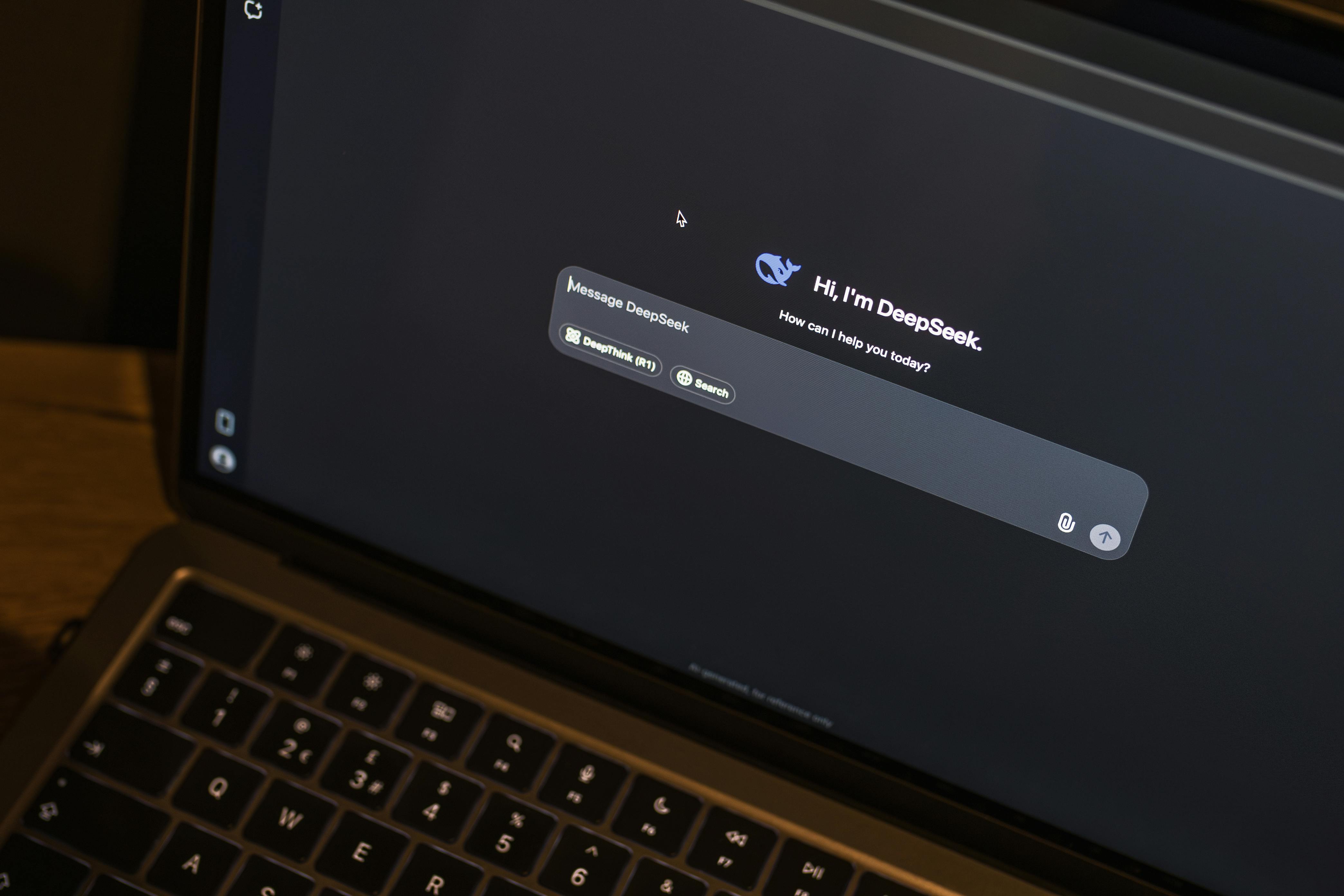
This Photo was taken by Matheus Bertelli.
Performance monitoring and optimization
Continuous optimization requires sophisticated monitoring systems that track user satisfaction, query success rates, and conversion metrics across different languages and user segments. The most effective approaches combine quantitative analytics with qualitative feedback to identify improvement opportunities.
Key performance indicators should include response accuracy rates, query completion rates, customer satisfaction scores, and revenue attribution from voice interactions. AI-powered competitor analysis can provide additional insights into industry benchmarks and competitive positioning in voice search performance.
Measuring success and ROI in voice search optimization
Quantifying the impact of voice search optimization requires sophisticated measurement frameworks that capture both direct and indirect value creation. Traditional metrics like organic traffic and keyword rankings tell only part of the story in voice search scenarios.
Advanced analytics and attribution modeling
Voice search interactions often begin customer journeys that convert through other channels, making attribution modeling crucial for accurate ROI calculation. Advanced analytics systems track user paths from voice interactions through website visits, app downloads, phone calls, and in-store purchases.
The most successful Dubai businesses use multi-touch attribution models that assign appropriate credit to voice interactions based on their role in the customer journey. This approach reveals that voice search often serves as a high-quality top-of-funnel channel that influences purchases across multiple touchpoints.
| Voice Search Metric | Dubai Average 2025 | Top Performers | Impact on Revenue |
|---|---|---|---|
| Query Success Rate | 67% | 89% | +34% conversion lift |
| Multi-language Accuracy | 54% | 81% | +67% customer satisfaction |
| Voice Commerce Conversion | 3.2% | 8.7% | +172% revenue per query |
| Customer Retention Rate | 43% | 71% | +89% lifetime value |
Customer lifetime value optimization
Voice interactions create unique opportunities to increase customer lifetime value through personalized recommendations, proactive service, and enhanced convenience. Businesses that excel at voice search optimization report 2.3x higher customer lifetime values compared to those focusing solely on traditional digital channels.
The key lies in using voice interactions to deepen customer relationships rather than simply completing transactions. This approach requires sophisticated CRM integration and customer journey mapping that extends far beyond individual voice queries.
Future trends shaping voice search in Dubai through 2026
The voice search landscape in Dubai continues evolving rapidly, with several emerging trends that will define competitive advantages through 2026. Forward-thinking businesses are already positioning themselves to capitalize on these developments.
Generative AI integration
Large language models specifically trained on Dubai market data are beginning to transform voice search capabilities. These systems can generate contextually appropriate responses, create personalized recommendations, and handle complex multi-step interactions that previously required human intervention.
The integration of generative AI enables voice systems to engage in genuine conversations rather than simply responding to commands. This capability opens new possibilities for customer service, sales, and brand engagement that traditional voice search couldn’t support.

This Photo was taken by Matheus Bertelli.
IoT ecosystem integration
Dubai’s smart city initiatives are creating vast opportunities for voice search integration across connected devices, vehicles, and infrastructure. Smart buildings, connected cars, and IoT sensors generate contextual data that enhances voice search accuracy and relevance.
For example, voice queries in connected vehicles can access real-time traffic data, weather conditions, and location-specific recommendations to provide highly relevant responses. AI-powered mobile app marketing strategies increasingly incorporate these connected experiences to create seamless customer journeys across multiple touchpoints.
Regulatory and privacy evolution
Evolving privacy regulations and data governance requirements will significantly impact voice search implementation strategies. Dubai businesses must balance personalization capabilities with privacy protection, implementing transparent data practices that build customer trust while enabling sophisticated AI functionality.
The most successful implementations will use privacy-preserving AI techniques, local data processing, and clear customer consent frameworks to maintain competitive advantages while exceeding regulatory requirements.
Frequently asked questions about voice search optimization in Dubai
How long does it take to see results from voice search optimization?
Most Dubai businesses begin seeing improved voice search visibility within 3-4 months of implementing proper optimization strategies. However, significant traffic and revenue impacts typically require 6-8 months as search engines index multilingual content and user adoption grows.
What percentage of my SEO budget should focus on voice search?
Leading Dubai businesses allocate 25-35% of their SEO budgets to voice search optimization by 2025. This allocation reflects voice search’s growing importance while maintaining investment in traditional search strategies that continue delivering results.
Can small Dubai businesses compete with large companies in voice search?
Small businesses often have advantages in voice search optimization, particularly for local queries and niche markets. Their agility allows faster implementation of advanced strategies, while local knowledge provides authenticity that larger competitors struggle to replicate.
How do I measure voice search ROI accurately?
Effective ROI measurement requires multi-touch attribution modeling that tracks customer journeys from voice interactions through final conversions. Focus on metrics like assisted conversions, customer lifetime value increases, and brand awareness improvements rather than direct voice search sales alone.
What technical skills does my team need for voice search optimization?
Successful voice search optimization requires understanding of natural language processing, multilingual SEO, conversational UI design, and analytics interpretation. Many Dubai businesses partner with specialized agencies rather than building internal expertise from scratch.
How important is Arabic language optimization compared to English?
Both languages are crucial, but the highest value lies in optimizing for mixed Arabic-English queries that reflect how Dubai residents actually search. Pure Arabic optimization captures 34% of voice queries, while hybrid language optimization captures an additional 41% of the market.
Your voice search advantage starts now
Dubai’s voice search revolution presents an unprecedented opportunity for businesses willing to embrace advanced AI strategies and multilingual optimization. While most companies remain trapped in traditional SEO thinking, early movers are capturing market share through sophisticated natural language processing, conversational commerce, and culturally intelligent customer engagement.
The businesses that thrive through 2026 will be those that understand voice search as more than a technical upgrade – it’s a fundamental shift toward conversational, contextual, and culturally aware customer experiences. By implementing advanced NLP strategies, integrating voice commerce capabilities, and building genuine AI-powered customer relationships, you position your business at the forefront of Dubai’s digital transformation.
The voice search opportunity window won’t remain open indefinitely. As more businesses recognize its potential, competition will intensify and implementation costs will rise. The question isn’t whether voice search will dominate Dubai’s digital landscape – it’s whether your business will be ready to capitalize on the transformation or be left behind by competitors who acted sooner.
Success in voice search optimization requires commitment, expertise, and strategic execution. But for businesses that embrace this challenge, the rewards extend far beyond improved search rankings – they gain competitive advantages in customer acquisition, engagement, and retention that compound over time into substantial market leadership positions.